

Thank You for Being My Teacher
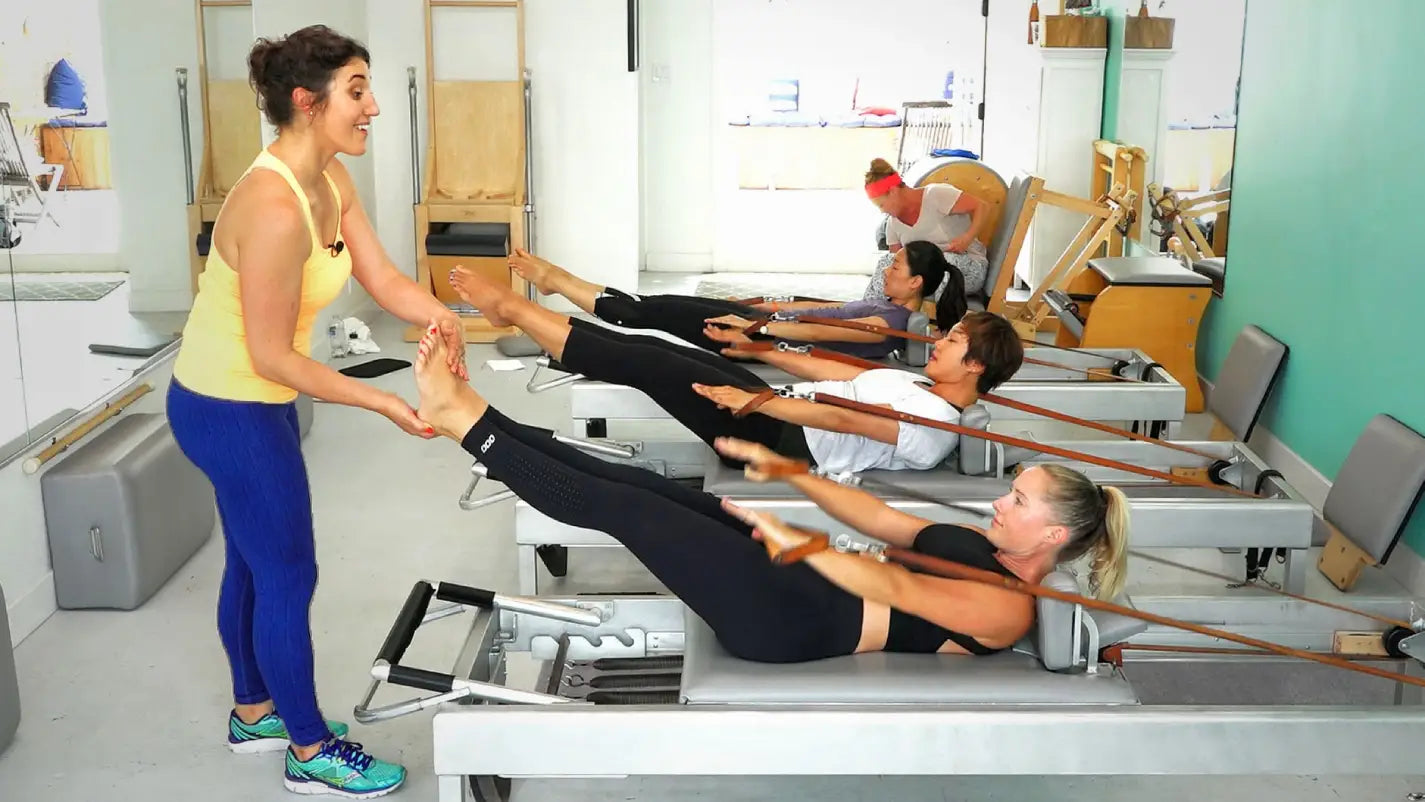

Photography via Pilatesology
Written By: Victoria Torrie-Capan
At the end of my children’s Suzuki violin classes, both group and 1:1, the teacher and student bow to one another and say, “Thank you for being my teacher.”
It is one of my favorite parts of the Suzuki educational system. This simple ritual acknowledges something profound: the teacher is learning from the student just as much as the student is learning from the teacher. It is an exchange. One that empowers the student, even within a structured educational system that must be followed for progress.
The Suzuki method has very specific markers and guidelines that students must achieve to move forward. Yet within that structure, there is space for individuality. The goals are clear, but the path to reach them can be entirely personal. These ritual honors that contribution. It says: you matter in this process.
What This Has to Do with Classical Pilates
Why begin an article about Classical Pilates with violin lessons?
Because both are educational systems.
Both rely on a method that, when followed with precision and consistency, produces results. Both have structure, progression, and clear benchmarks. And in both, there are two essential variables: the teacher and the student.
These variables are what create transformation—not just the system itself.
A method alone does not teach. It is the relationship within the method that brings it to life.
The Student: The Variable That Matters Most
There is an immense amount of research, time, and money dedicated to understanding how people learn—how they receive, process, and apply information. While our understanding continues to evolve, one constant remains: the relationship between teacher and student.
Most often, the teacher holds the position of leadership, but what if that leadership was guided, truly guided, by the uniqueness of the student?
Perhaps the goals remain the same, but the path to reach them becomes individual.
Both of my children, four years apart in age, must complete 500 well-executed bow holds before they are even allowed to hold a violin. Yet their fine motor development is vastly different. Their timelines are different. The exercises that support them are different. And still, they will both reach the same goal.
This is no different in Classical Pilates.
Yes, there is order. There is progression. A student should be able to execute a Roll Up before learning a Teaser, but how they arrive there—that is where the work becomes personal.
There is no algorithm for learning Classical Pilates.
Each body is different. Each learning style is different. Each set of goals is different.
It is the teacher’s role to uncover that path.

The Teacher: Learning How to Learn
In a comprehensive Pilates training program, observation hours and practice teaching hours are not just requirements—they are the foundation of becoming a teacher.
You do not become a teacher by learning choreography.
You become a teacher by learning how to see, how to listen, and how to respond.
It is within those hours—watching, teaching, you begin to understand something deeper: how to learn from the student.
I remember, during my own training, the moment we were given the privilege of teaching our teachers’ clients. At the time, it felt like a milestone. In hindsight, it was something much more significant.
Those students were teaching me.
From the outside, I was leading the session, but within the relationship, they were showing me what they had learned, how they interpreted the work, and what their unique Pilates journey looked like.
Every new teacher should have the experience of “teaching” a seasoned client.
A seasoned client will teach you more than any weekend training ever could. It will humble you. It will expand you.
In my early teaching years in New York City, where Classical Pilates had already been practiced for over 80 years, I worked with clients who had been doing Pilates longer than I had been alive.
Classical Pilates Instructors shared invaluable insights:
-
How Romana Kryzanowska had taught them their Stomach Massage.
-
Their personal Footwork setup.
-
A correction on the Apparatus they never forgot.
This is how you learn to become a teacher.
The training teaches you the system.
The student teaches you how to teach—if you are willing to learn.
A Client-Centered Approach to Pilates Teaching
This is what sets an experienced teacher apart:
- A teacher who has chosen to remain a student.
- A teacher who stays true to the goals and progression of the system, while creating a path that reflects the individual in front of them.
The order of exercises gives structure to a 50-minute session. It provides clarity, consistency, and direction.
But it is the client who defines the purpose.
Their body.
Their history.
Their goals.
Their capacity on that given day.
The exercises are not the goal.
They are the tools.
And when chosen with intention, they become a reflection of the client—not just the system.
Thank You for Being My Teacher
What if, at the end of every Pilates session, we held that same spirit as the Suzuki bow?
An unspoken acknowledgment:
Thank you for showing me how to teach you.
Thank you for trusting me with your process.
Thank you for being my teacher.
Because the most meaningful work doesn’t happen to the client.
It happens with them.
And often, if we are paying attention—
It happens because of them.
With gratitude to all my clients in the past 23 years- THANK YOU for being MY teacher.
About Victoria Torrie-Capan

Victoria Torrie-Capan is the founder of Music City Moves Me- Classical Pilates Conference April 10-12, 2026. Her core values as a teacher trainer and business owner, is to elevate the education and professionalism of the Pilates teacher. Victoria is engaged with the Pilates industry traveling internationally to train teachers as well with workshops and mentorships. Victoria began studying Pilates in 2002 at Goucher College in Baltimore, Maryland. She earned her Bachelor of Arts in 2004 with extensive coursework incorporating Dance Therapy, Psychology, Anatomy and Kinesiology. Victoria completed her Pilates certification through Romana’s Pilates in 2005. Victoria also is a certified ELDOA trainer and student of world-renowned osteopath Dr Guy VOYER and has been training under him since 2016. Victoria deliveries the Pilates system through an effective combination of strong cues and client-specific adjustments, empowering each individual to achieve their unique goal. Victoria guides her clients in building movement strategies. She systematically develops specific movement patterns educating the body through the various environments of Pilates apparatus. Victoria resides in Nashville, TN and owns Studio 66 a boutique fitness studio. Her children Theo and Rosie inspire her continued journey as a movement educator.
1 Response
Leave a comment
Comments will be approved before showing up.
Sonje Mayo
April 15, 2026
That was very eloquently stated and spot on. I sincerely hope that Pilates teachers and practitioners will gain more insight from this brilliant article.