

The Studio Owner's Paradox: Why Your Best Marketing Asset Is Already in the Room
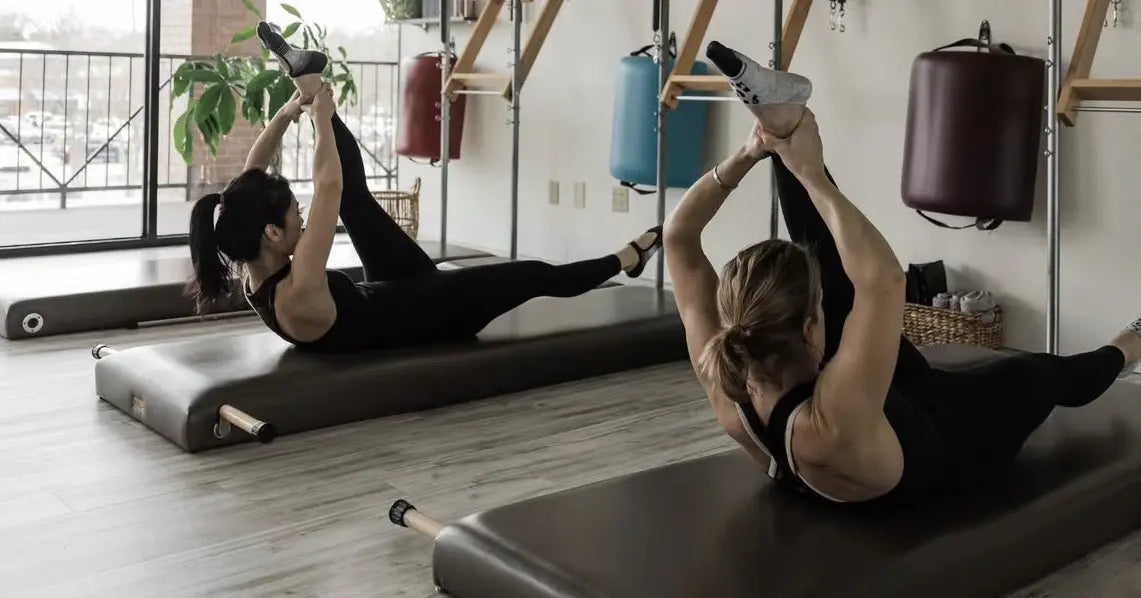

Studio Featured Park Cities Pilates
Written by Seran Glanfield
You're chasing new clients while your most powerful growth strategy sits quietly in your Tuesday morning class. Here's how to stop overlooking it.
There's a particular kind of exhaustion that studio owners know all too well. It's not the physical tiredness from teaching back-to-back sessions (though that's real too). It's the mental drain of feeling like you're constantly pushing a boulder uphill when it comes to marketing. You post on Instagram. You tweak your website. You think about running ads. You wonder if you should start a podcast, a newsletter, or a YouTube channel.
And meanwhile, your client Janet, who has been coming to your studio for three years, who told her doctor that Pilates changed her life, who tears up when she talks about what movement has done for her body, has never once been asked to refer a friend.
That is the Studio Owner's Paradox.
You're looking outward for growth when your most powerful marketing asset is already in the room.
The Most Overlooked Growth Strategy in the Pilates Industry
Let's be honest about something. The Pilates industry (especially the Classical Pilates world) has a complicated relationship with marketing. Many teachers, just like you, got into this world because they love movement, they love people, and they believe deeply in the method. Sales and marketing can feel uncomfortable, transactional, even at odds with the sacred nature of the work.
So instead of leaning into the most natural form of marketing there is, genuine human connection and word of mouth, many studio owners default to digital strategies that feel safer, more distant, and frankly, far less effective.
Here's what the data consistently shows: referred clients are more likely to convert, stay longer, and spend more than clients who find you through an ad or a random Google search. They arrive with built-in trust. They already believe in what you do, because someone they respect told them to trust you.
And yet, referral strategy is one of the least developed areas in most independent Pilates studios.
Why Word of Mouth Doesn't Just "Happen"
There's a common misconception that if you do good work, referrals will naturally follow. And to some extent, that's true. A delighted client will occasionally mention you to a friend. But "occasionally" isn't a growth strategy. Relying on organic word of mouth without a system behind it is like hoping it rains instead of turning on the sprinklers.
The truth is, referrals need to be designed, not hoped for.
Your clients are busy. They're not sitting around thinking about how to grow your business. They love you, but they have jobs and kids and overflowing inboxes. The reason most happy clients don't refer their friends isn't because they don't want to. It's because it simply doesn't occur to them in the moment, or they don't know how to do it in a way that feels natural.
Your job is to make it easy. To give them the nudge. To create a culture where referrals feel like a natural extension of the community you've built, not a cringe-worthy sales ask.
Building a Pilates Studio Culture That Generates Referrals Naturally
This is where it gets interesting and where Classical Pilates actually has a genuine advantage.
The nature of the work, the intimacy of the apparatus, the depth of the one-on-one or small group session, and the transformation that happens over time creates an unusually strong emotional bond between client and teacher. That bond is gold. When you nurture it intentionally, it becomes the foundation of a referral culture.
Here's how to start:
-
Make transformation visible. Celebrate your clients' progress publicly (with permission) and privately. A quick note that says, "I noticed how much stronger your footwork has become on the Reformer, you should be so proud," costs you nothing and means everything. People share experiences that make them feel seen.
-
Ask at the right moment. Timing matters. The best time to ask for a referral is immediately after a breakthrough moment. When a client just did something they've been working toward, or when they spontaneously tell you how much the work has helped them. That's your moment. A simple "I'm so glad, do you have any friends who might benefit from this too? I'd love for you to send them my way" is genuinely all it takes.
-
Remove the friction. Make it effortless to refer. Have a simple referral card (digital or physical). Create a shareable link to your intro offer. Think about what you're asking your clients to do and make it as easy as humanly possible. The simpler the action, the more likely it is to happen.
-
Acknowledge and reward it. When someone refers a new client, acknowledge it meaningfully. A handwritten thank-you note. A complimentary add-on. A genuine expression of gratitude. This doesn't have to be a formal referral rewards program, it just has to be intentional and warm.
- Build community, not just clientele. The studios with the strongest referral cultures aren't just collections of individual client relationships. They're communities. When your clients feel like they belong to something, when they know each other's names, when they feel connected to the mission, they naturally want to bring their people into that world.
The Numbers Don't Lie: Why Retention Is Your Best Marketing ROI as a Studio Owner
Here's a reframe worth sitting with: retention is marketing.
Every client you keep for an extra six months is a client you didn't have to pay to acquire. Every client who renews their membership, upgrades their package, or refers a friend is contributing to your revenue in a way that no Instagram ad can replicate.
And yet, most studio owners spend far more energy and money on acquisition than on retention. It's understandable…new clients feel like growth, and keeping existing clients can feel like maintenance. But the math simply doesn't support this bias.
Consider this: acquiring a new client can cost five to seven times more than retaining an existing one. If your retention is leaking, if clients are quietly disappearing after a few months, no amount of new lead generation will sustainably grow your studio.
You're filling a leaking bucket.
The fix isn't always complicated. Often it comes down to:
-
Connection: Do your clients feel genuinely known and cared for beyond the session itself?
-
Progress: Are they clear on how they're improving? Do they feel the work is working?
-
Community: Do they feel like they belong? Is there a reason to stay beyond the physical benefit?
-
Communication: Are you staying in touch between sessions in a way that feels warm and personal, not just promotional?
These aren't marketing tactics. They're relationship practices. And they happen to be extraordinary business strategy.
Practical First Steps: Activating Your In-Room Marketing
You don't need a new software platform or a marketing budget to start implementing this. You need intention and a few simple systems.
This week, try this:
-
Identify your top 10 most loyal, enthusiastic clients. These are your potential brand ambassadors. Write their names down.
-
Schedule a personal touchpoint with each of them. Think a check-in text, a progress note, a genuine acknowledgment of something specific about their practice.
-
Create one simple referral pathway. Whether that's a referral card, a digital link, or simply a scripted ask you feel comfortable making after a breakthrough session.
-
Track it. Know where your new clients are coming from. If you're not currently asking every new enquiry "how did you hear about us?" start now. You cannot improve what you don't measure.
- Let the apparatus speak for the work. Gratz equipment is often a natural point of curiosity for clients. Use those moments to explain how the apparatus supports the Classical method and why the details of the equipment matter to the experience of the work.
The Bigger Picture
Here's what all of this is really about, underneath the tactics and the referral systems and the retention metrics.
It's about recognizing that the work you do is remarkable, and remarkable things spread when they're given the right conditions to do so.
You are not just running a Pilates studio. You are changing the way people live in their bodies. You are giving people back their confidence, their mobility, their sense of self. That is powerful. That is shareable. That is worth talking about.
Your best marketing asset isn't your Instagram grid or your Google ranking. It's the woman who walked in with chronic back pain and now stands taller than she has in twenty years. It's the story that happens inside your studio, every single day.
You just need to give it somewhere to go.
About Seran Glanfield
Seran Glanfield, founder of Spring Three and host of the award-winning Pilates Business Podcast, is a leading business coach and consultant to boutique fitness studio owners around the world. With over a decade of hands-on experience, Seran has masterminded the growth and development of hundreds of studios, becoming the go-to expert for those looking to scale their studios, transforming them into sustainably profitable, streamlined studios. Seran’s expertise encompasses all facets of business management, including marketing, retention, sales, team management, pricing, and strategic growth. A graduate from the prestigious London School of Economics, Seran is also a certified business consultant and both Power Pilates and Romana’s Pilates trained Certified Pilates Teacher.
To learn more about working with Seran and Spring Three, go to: Spring Three or follow @seran_spring_three
Leave a comment
Comments will be approved before showing up.