

The Only 7 Numbers Your Studio Needs to Track (And What They're Actually Telling You)
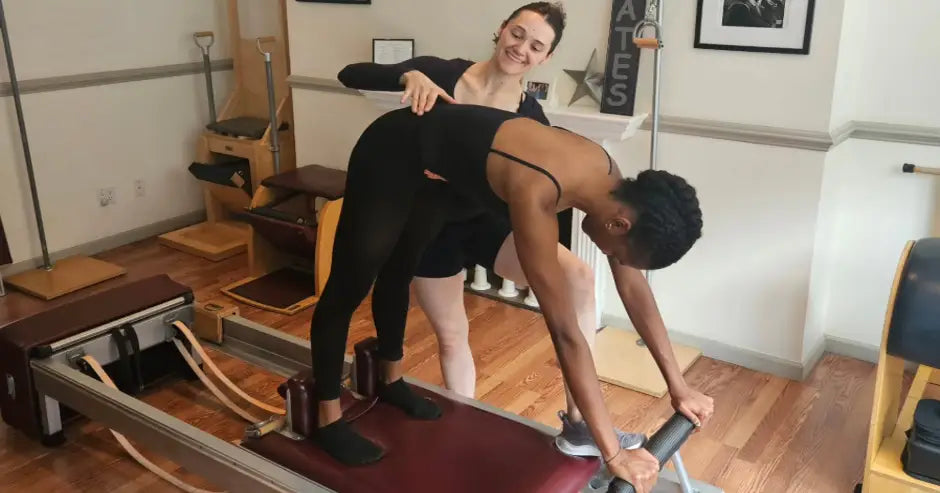

Photo Via Star Pilates
Written by Seran Glanfield
You became a Pilates teacher because you love movement. You love the methodology, the precision, the transformation you watch happen in your clients' bodies over weeks and months. You probably did not become a Pilates teacher because you have a burning passion for spreadsheets.
And yet — here you are. A studio owner. Responsible not just for the quality of the work on the Pilates Mat, but for the financial health of an entire business.
If the phrase "track your KPIs" has ever made you feel a low-grade sense of dread, you're not alone. Most studio owners in the Classical Pilates world came up through teaching, not business school. Numbers can feel like a foreign language — or worse, like a verdict on whether you're doing enough.
But here's what no one tells you: you don't need to track everything. You just need to track the right things.
There are exactly 7 numbers that will tell you everything you need to know about the health, growth, and profitability of your studio. Master these, and the fog lifts. You stop guessing. You start making decisions from clarity instead of anxiety.
Let's break them down.
Why Most Pilates Studio Owners Avoid the Numbers (And Why That's Costing Them)
Avoidance is understandable. If you don't look at the numbers, you can't be disappointed by them, right?
Except the numbers exist whether you look at them or not. And a studio running on intuition alone is a studio that's one slow month away from a crisis.
Tracking your key metrics isn't about judgment. It's about information. It's the difference between flying blind and having a dashboard that tells you exactly what's working, what needs attention, and where your next opportunity is.
The goal isn't to become a data analyst. The goal is to stop being afraid of your own business.
The 7 Numbers in Pilates That Actually Matter
1. Lead-to-Trial Conversion Rate
This is the percentage of people who express interest in your studio — through an enquiry, a DM, a phone call, a website form — who actually book and show up for a trial session.
How to calculate it: Divide the number of trials booked by the number of enquiries received, then multiply by 100.
If 20 people enquire in a month and 8 book a trial, your lead-to-trial conversion rate is 40%.
What it's telling you: A low rate here often means your marketing is failing. You’re attracting clients but they are not interested in staying… it’s worth investigating further and gathering direct feedback from both those who do and do not stay.
2. Trial-to-Membership Conversion Rate
Of everyone who takes a trial class or intro session at your studio, how many go on to become regular paying clients?
How to calculate it: Divide the number of new memberships or packages purchased by the number of trials completed.
What it's telling you: This is arguably the most important conversion metric in your business. A new client experience is one that makes someone feel welcomed, assessed, challenged in the right way, and excited about their progress.
If your number is lower, don't panic. But do investigate. The problem is almost never the methodology. It's usually the experience design around it: the follow-up, the conversation at the end of the session, the offer presented, and how clearly you communicated what's possible for that specific person.
3. Average Pilates Client Lifetime Value (CLV)
This is the total revenue one client generates over the entire time they're with your studio.
How to calculate it: Multiply the average monthly spend per client by the average number of months they stay.
What it's telling you: CLV changes how you think about acquisition entirely. If your average client stays for 18 months and spends $200/month, their lifetime value is $3,600. Suddenly, investing $100 in a well-targeted ad to attract them makes complete sense. Without knowing this number, marketing spend feels like a gamble. With it, it becomes a calculated investment.
4. Monthly Recurring Revenue of Pilates Studio (MRR)
MRR is the predictable, consistent income your studio generates each month from memberships, recurring packages, and committed client relationships.
How to calculate it: Add up all recurring monthly revenue from active memberships and ongoing packages.
What it's telling you: MRR is your financial heartbeat. It's the number that determines whether you can pay your rent, your instructors, yourself — without white-knuckling through the end of every month.
A studio that relies heavily on drop-ins and one-off purchases will always feel financially volatile. Building recurring revenue creates stability, predictability, and the mental space to grow intentionally rather than reactively.
Watch this number month over month. Consistent growth here means your business model is working.
5. Client Retention Rate
How many of your active clients are still with you at the end of a given period compared to the start?
How to calculate it: Divide the number of clients retained over a period by the number you had at the start, then multiply by 100.
What it's telling you: Retention is the quiet engine of a profitable studio. Acquiring a new client cost significantly more — in time, money, and energy — than keeping an existing one. A high retention rate means your clients feel seen, are experiencing progress, and are connected to your studio community.
If clients are leaving after 3–4 months, that's a signal. Are they plateauing? Do they feel like they belong? Is the value they're receiving matching the investment they're making?
Retention isn't just a business metric — it's a measure of impact.
6. Utilization Rate
What percentage of your available class or session spots are being filled?
How to calculate it: Divide the number of spots booked by your total available spots, then multiply by 100.
What it's telling you: Low utilization means revenue is literally sitting unfilled on your schedule. This number helps you identify which sessions are thriving, which are underperforming, and whether your current timetable actually reflects client demand.
A consistently low utilization rate in a particular timeslot isn't a personal failure — it's data. It's permission to restructure your schedule, consolidate classes, or redirect energy toward filling the sessions people actually want to attend.
7. Profit Margin
Revenue is what comes in. Profit margin is what's actually yours.
How to calculate it: Subtract your total expenses from your total revenue, divide by total revenue, and multiply by 100.
What it's telling you: This is the ultimate health check. You can have a full studio, a packed schedule, and a beautiful brand — and still not be profitable if your costs are outpacing your income.
Healthy profit margins in boutique fitness studios vary enormously depending on your model, team size, and overhead. If your margin is thin, the answer might not be "charge more." It might be about restructuring your offerings, reducing overhead, or shifting the balance between private sessions and group classes.
Know your number. It changes everything.
How to Start Without Overwhelm
You do not need to implement all seven of these today. In fact, please don't. That's a recipe for closing your laptop and never returning.
Instead, do this:
-
This week: Identify which two numbers you currently have no visibility on.
-
This month: Pull the data you already have and calculate as many of these as you can, even roughly.
-
Next quarter: Build a simple monthly tracker — even a basic spreadsheet — and commit to reviewing it on the same day each month.
That's it. Consistency over complexity.
The Classical Pilates Studio You're Building Deserves a Strong Foundation
You didn't pour your heart into learning Classical Pilates — the lineage, the methodology, the precision of this work just to run a business that constantly feels uncertain.
These 7 numbers are not obstacles. They are tools. And like any good tool, they're only useful if you pick them up.
The studios that grow sustainably, serve their communities deeply, and give their owners actual freedom — financial and otherwise — are the ones where the owner knows their numbers and makes decisions accordingly.
You've already done the hard work of becoming an exceptional teacher. Now it's time to become the business owner your studio needs.
Start with seven numbers. The rest follows.
Seran Glanfield
Seran Glanfield, founder of Spring Three and host of the award-winning Pilates Business Podcast, is a leading business coach and consultant to boutique fitness studio owners around the world. With over a decade of hands-on experience, Seran has masterminded the growth and development of hundreds of studios, becoming the go-to expert for those looking to scale their studios, transforming them into sustainably profitable, streamlined studios.
Seran’s expertise encompasses all facets of business management, including marketing, retention, sales, team management, pricing, and strategic growth.
A graduate from the prestigious London School of Economics, Seran is also a certified business consultant and both Power Pilates and Romana’s Pilates trained Certified Pilates Teacher.
To learn more about working with Seran and Spring Three, go to: www.springthree.com or follow @seran_spring_three
The content and ideas shared are proprietary to Spring Three and are for review only. Unauthorized use, sharing, or reproduction without written permission is prohibited. ©️ Spring Three LLC 2025
Leave a comment
Comments will be approved before showing up.