

Precision in Practice: Matwork with the Reformer Box
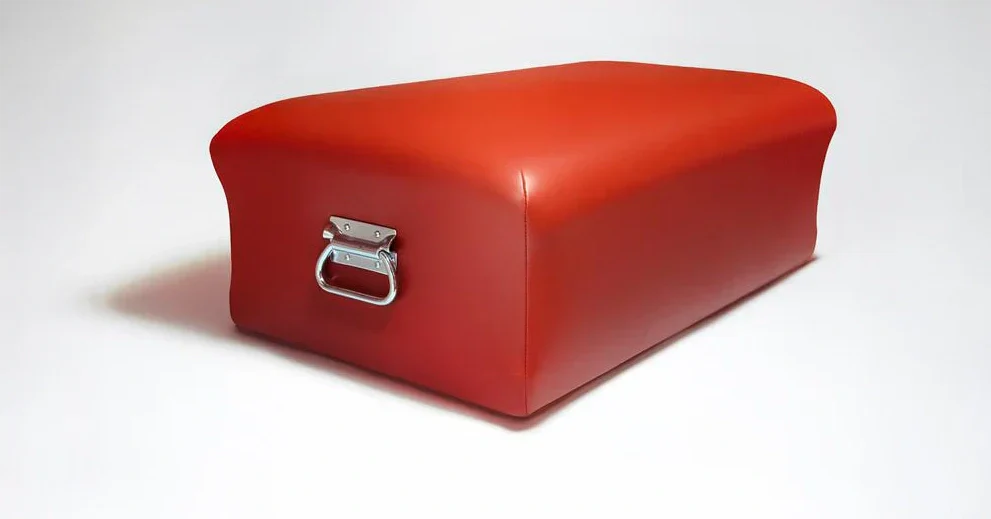

The Reformer Box is typically associated with different series on the Reformer, particularly in the Short Box series. However, it can also be used on the Pilates Mat to create a new layer of challenge, control, and body awareness. It deepens connection to the powerhouse while encouraging full-body elongation.
Using the Reformer Box on the Mat requires control and focus. The body must generate and control motion precisely, making every movement intentional and demanding.
A New Twist on Mat Work
When the Reformer Box is incorporated into Mat exercises, it immediately increases the range of motion. This added height and structure challenge stability while inviting length through the spine and limbs. The result is work that feels expansive yet deeply controlled.
The practitioner must rely entirely on core strength, breath, and coordination. This makes it an excellent tool for clients who are ready to progress beyond foundational Matwork and explore more advanced variations with support and structure.
Control, Breath, and Focus
Working with the Reformer Box on the Mat demands full mental and physical engagement. Control becomes essential, not just in the large movements, but in the transitions between them. Breathing must remain steady and intentional.
Inhale to prepare and create length. Exhale to deepen control and connection to the powerhouse. Breathing helps maintain stability while allowing movement to remain precise.
Foot Strap Work and Leg Exercises
By securing one foot into the foot strap attached to the Mat, the Reformer Box can be used to support exercises such as leg extensions and leg circles. It provides elevation and feedback, helping guide alignment while increasing the demand on the powerhouse.
During these series, it is essential to maintain awareness of the head and neck. The head should never hang off the box. Instead, position yourself slightly closer to the edge of the Reformer Box, so the neck can rest comfortably and remain supported. This prevents unnecessary tension in the neck and shoulders and allows the body to focus on controlled movement rather than strain.
Rolling Back on the Reformer Box
Rolling back on the Reformer Box is both challenging and revealing. Instability requires focus, patience, and restraint. Rather than rolling too far or too quickly, the movement should remain small and controlled.
Roll back only to the lower back, then return upright with intention. This limited range challenges balance and deep abdominal control while strengthening the mind-body connection. Moving slowly is key, momentum will quickly overpower control if attention is lost.
Corkscrew using the Reformer Box
The Corkscrew can also be performed on the Reformer Box, much like it would be on the Wunda Chair. In studios equipped with a Studio Wall Unit with High Mat, the Reformer Box can be placed securely against the frame for added stability.
Handles on the sides of the box may be used for support if needed. When placing the feet on the box, position them firmly in the center. Avoid lifting or gripping the box with the feet. Instead, press down into the Reformer Box to create grounding and control.
As the legs move smoothly from left to right or right to left, focus on lifting and elongating through the spine. Movement should feel continuous and fluid, never rushed.
Additional Mat Exercises with the Reformer Box
The Reformer Box opens the door to a wide range of mat-based exercises, including:
-
Single leg stretches, which become more demanding due to the elevated and unstable surface
-
Side sit-ups, using the box to assist with alignment and controlled lateral flexion
-
Stretching, where the box supports length and clarity in positioning
Each of these exercises benefits from slow, deliberate movement.
Step-Ups and Standing Balance Exercises
Standing exercises and step-ups on the Reformer Box further challenge balance, coordination, and lower-body strength. These movements draw attention to the hips, glutes, and feet, emphasizing proper alignment and controlled weight transfer.
Step-ups in particular test balance control. Each transition requires focus and precision, reinforcing stability through slow, mindful movement rather than speed or force.
Embracing the Challenge
Because of its elevated and unfamiliar nature, working with the Reformer Box on the Pilates Mat may initially bring up a sense of fear or hesitation. This response is natural and useful. When approached thoughtfully, that edge of challenge encourages deeper focus and greater awareness.
By moving slowly, breathing intentionally, and staying present, the Reformer Box becomes a powerful tool for growth. Every movement invites clarity, confidence, and a stronger connection between the mind and body.
Moving with Intention
Across all exercises, the guiding principle remains the same: slow, controlled movements with full awareness. The Reformer Box does not reward rushing. Instead, it highlights the principles of Classical Pilates: control ,flow, precision, concentration, breath, centering.
The Reformer Box on the Mat is not about adding complexity for its own sake. It is about refinement. When a practitioner has established strength, control, and awareness, the Reformer Box becomes an invitation to deepen the work.
The challenge is honest and revealing, but always purposeful. Each movement asks the body to organize itself more clearly, with less momentum and more intention.
1 Response
Leave a comment
Comments will be approved before showing up.
Felice Fontana
January 31, 2026
These are great.