

A Change of Direction - The Surprising Complexity of Moving with the Push Thru Bar
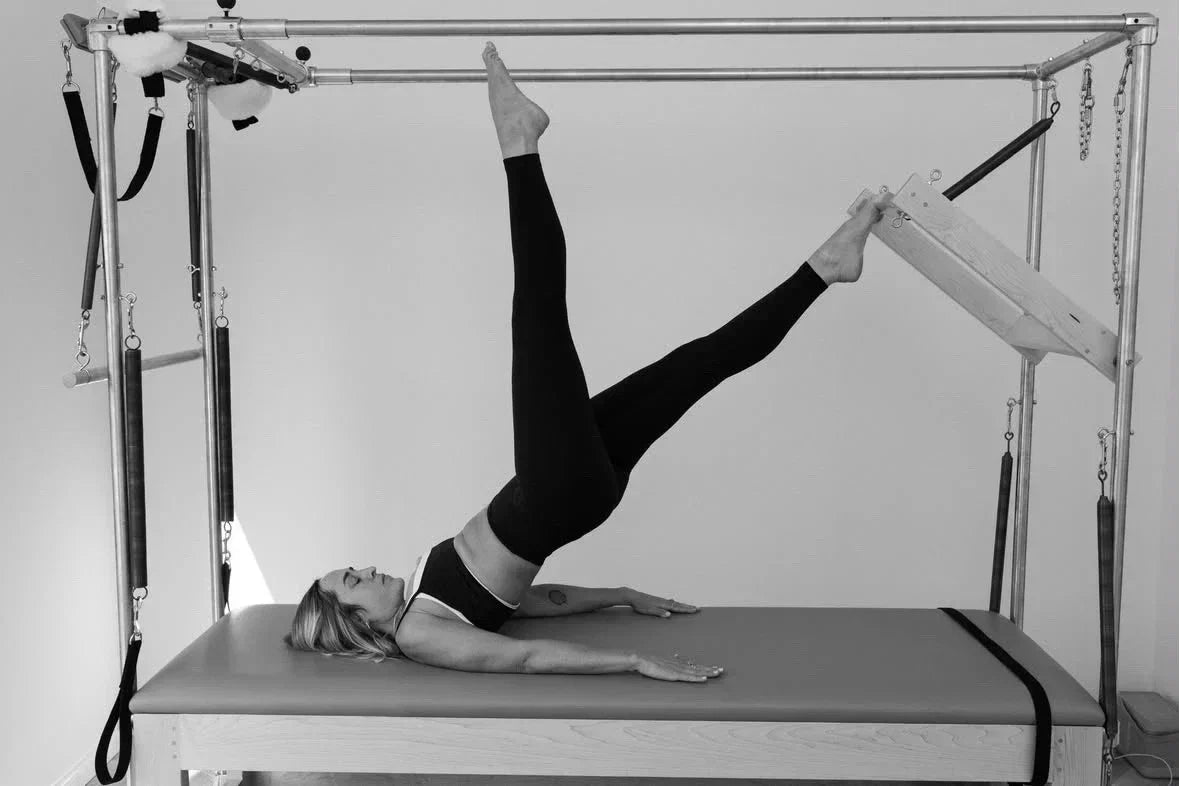

How can an apparatus both support movement and challenge it? The Push Thru Bar offers a unique balance of support and resistance, asking the practitioner to work with the apparatus throughout each movement.
This relationship develops through changes in direction, the challenge of controlling imbalances, and the experience of resistance in two forms: push and pull. A movement that feels familiar in one direction can feel entirely different when the resistance changes. The practitioner must continually respond to the spring, adjusting effort, organization, and control as the bar moves through space.
A Conversation Between Body and Bar
The Push Thru Bar is an excellent teacher in the Pilates system. It offers feedback as soon as a movement is made, signaling when an adjustment may be needed in the execution of the exercise.
- If you rush, rely on momentum, or lose control: you feel it.
- If your alignment changes: the spring tells you.
- If you lose connection with the movement: the quality of the exercise changes.
This makes the Push Thru Bar less of a piece of equipment and more of a conversation partner.
When switching directions, the practitioner begins to recognize how the body responds to each movement, whether working into flexion or extension. The body is challenged to maintain organization through changes in spring tension and the practitioner’s position in relation to the bar.
Learning to Work with the Push Thru Bar Spring
The Push Thru Bar reveals a different challenge depending on whether the practitioner is pushing or pulling against the spring. In a push, the practitioner works to control the bar as the spring provides resistance. In a pull, the direction of that resistance changes, asking the body to organize itself differently.
Flexion and extension further change this relationship, meaning a familiar movement can feel entirely different depending on the direction of the spring.
Flexion: Building Control and Strengthening Spinal Articulation
In flexion-based movements, such as the Roll Down, Push Through, Tower, and Shoulder Roll Up, the practitioner works to articulate through the spine while maintaining support from the powerhouse. The challenge isn't simply creating a rounded shape; it's controlling the movement segment by segment while maintaining connection throughout the body.
The Push Thru Bar can provide a clear pathway for the movement, but that pathway doesn't make the work passive. As the practitioner pushes through the bar, the spring provides resistance and feedback that requires continuous adjustment. The goal is not to push farther simply because the bar allows it. Instead, the challenge is finding a range that can be controlled with precision.
This is where the Push Thru Bar begins to expose the difference between moving through a range and controlling a range.
Extension: Maintaining Body Organization Through Spinal Extension
Extension-based movements such as Swan, Reverse Push Thru, and Breathing ask the practitioner to open the front of the body while maintaining strength and organization through the posterior chain. The thoracic spine is encouraged to extend while the shoulders and powerhouse remain connected.
The experience can feel entirely different.
Where flexion asks the practitioner to organize the body as it folds and articulates forward, extension asks the body to open without losing its support. The challenge becomes one of maintaining length and control while moving in the opposite direction.
And this is where the Push Thru Bar becomes particularly interesting: the same apparatus that helped guide you into one movement now asks you to respond differently.
The direction has changed. So has the demand.

Building Precision Through Pilates Spring Resistance
One of the most revealing moments on the Push Thru Bar isn't always when you push or pull. The true challenge of the Push Thru Bar often comes when it’s time to return the bar to its resting position.
Because spring resistance changes as the spring length changes, the body must adapt its force throughout the movement. A controlled return requires the practitioner to resist the pull of the spring rather than allowing the bar to move them.
This is where control becomes tangible.
This relationship between spring resistance, control, flexion, and extension becomes especially clear within the Push Through itself. Britt Holland, founder of Cheeky Pilates, shared how “The Push Thru Bar is a great place to focus on flexion and extension. The resistance of the spring offers support and helps with control.
One exercise where we are exploring both flexion and extension would be the push through. During this exercise we are using our center to push the bar down and through to find our c-curve. On the return, as we bring the bar back up to the sky, we are finding a reach and extending our spine. This exercise helps strengthen the abdominals, opens our back and feels great after a long day of sitting.”
The Push Thru Bar offers a dynamic way to build strength, improve spinal mobility, and reconnect with the body through controlled movement.
While the spring can assist the movement, it can also expose where control begins to disappear. A movement that looks simple from the outside can require considerable coordination to execute slowly, smoothly, and without momentum.

Creating Depth in Contrology
The Push Thru Bar can support movement, resist movement, or expose where greater control is needed. It can guide the body into a position while simultaneously asking the practitioner to actively organize that position.
And perhaps that's what makes the Push Thru Bar such an enduring part of the Classical Pilates system.
The challenge isn't found in moving the bar farther, faster, or with greater force. It's found in learning to listen to the apparatus, respond to its resistance, and maintain control as the direction changes.
Change direction, and the movement changes. Change your awareness, and the experience changes with it.
Leave a comment
Comments will be approved before showing up.